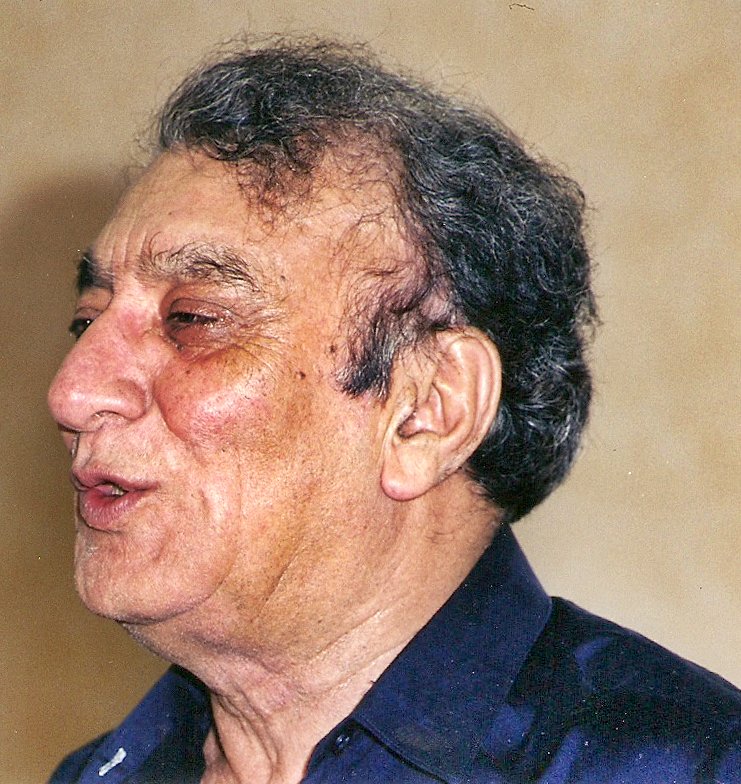
Faraz
One of the most loved Urdu poets of his age — a master of the ghazal whose voice of love and defiance still echoes.
Born Syed Ahmad Shah in 1931, the poet the world came to know as Ahmad Faraz took his pen name early and wore it for life. His roots lay in Kohat, though he was born in Nowshera, and he studied in Peshawar, earning master's degrees in both Urdu and Persian. He began his working life at Radio Pakistan and later taught as a college lecturer — but it was poetry, begun in his student days, that would define him. A Voice of Love and Defiance Faraz emerged as a ghazal poet with a signature entirely his own. He drew on the old themes of love and romance, yet he wrote his own age into his verse as well, with all its despair and disillusionment, producing some of the finest resistance poetry Urdu has known. That courage came at a cost. His open contempt for military dictatorship led to his arrest, and on his release he chose several years of self-imposed exile in Europe and Canada rather than soften his voice. His convictions stayed with him to the end: late in life he returned one of the nation's highest honours in protest at how the country was being governed. A Lasting Legacy Ahmad Faraz was prolific, leaving behind a long shelf of collections — among them Tanha Tanha, Dard-e-Aashob, Janaan Janaan, Shabkhoon, and Mere Khwab Reza Reza — later gathered into his complete works, Shahr-e-Sukhan Aaraasta Hai. But it is not the count of his books that endures. It is the way an ordinary reader, caught in love or loss or defiance, still reaches for a line of Faraz and finds it already waiting.